 Orlando Lemon Ltd.
Grow
Meyer in the dooryard
The lemon people actually keep in Central Florida is usually a Meyer, and Citrus Culture in the Home Landscape explains why. It does not recommend the true lemons for home use. It offers Meyer as the substitute, and it counts Meyer among the trees worth having for looks as well as fruit.
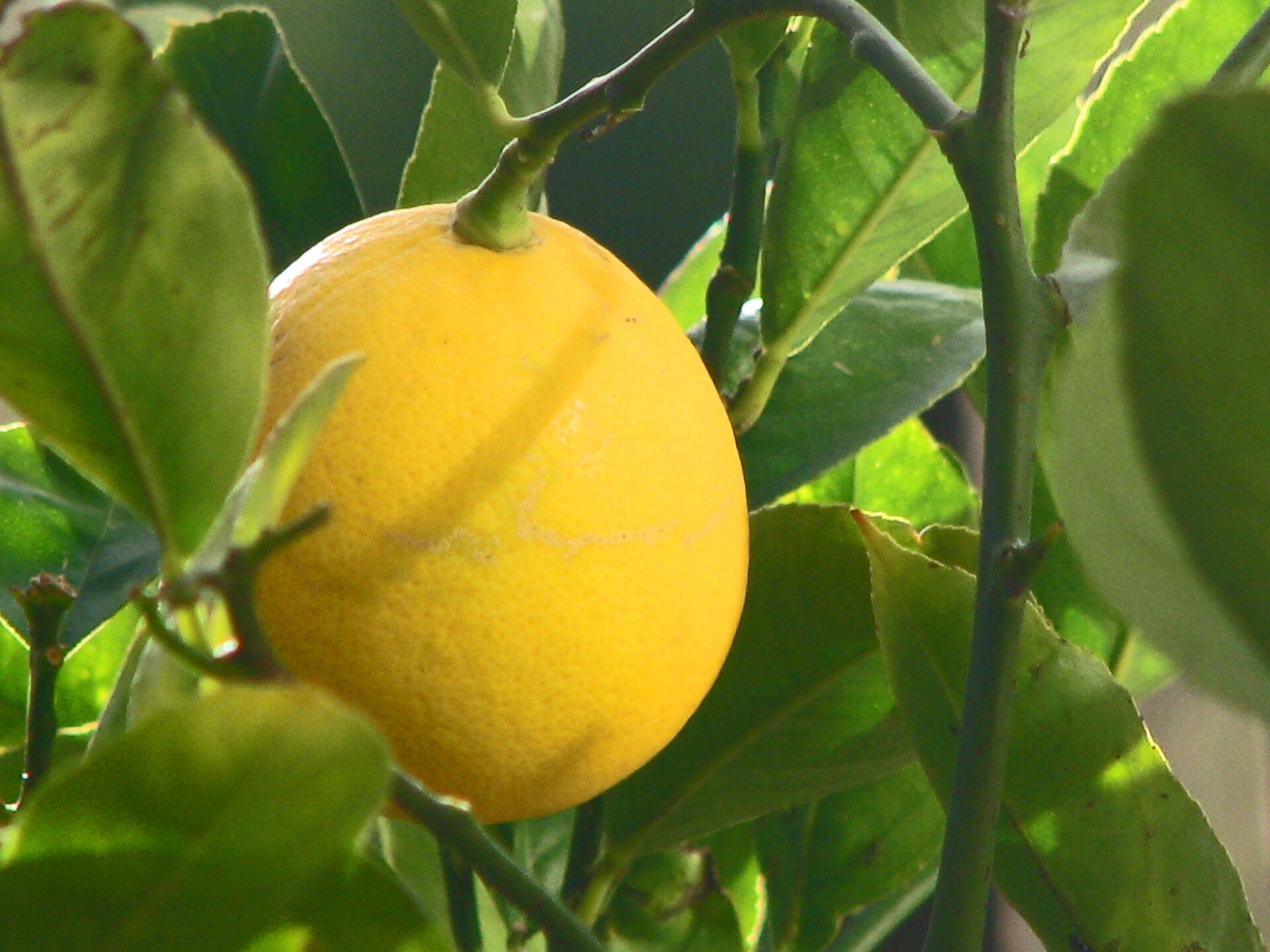
The true lemon (Eureka & Lisbon types) is not recommended for home use because of its susceptibility to scab. The 'Meyer' lemon is a reasonable substitute for true lemons in home gardens.
Why not a Eureka
That is the sentence that decides this page. The home-landscape citrus guide groups lemons and limes as acid fruits and rules the true lemons out for the home landscape on scab susceptibility alone. Its Table 1 lemon row backs it up, listing a July through December season, one to six seeds, and susceptibility to scab, greasy spot, and melanose. Meyer is the recommendation that replaces it, and the home-landscape citrus guide also lists Meyer under dual-purpose fruits alongside kumquats and calamondin, meaning trees that carry real ornamental value along with useful fruit. A Meyer is not a small Eureka. It is rounder, thinner-skinned, and less sharp, which is why a stand selling Meyers is selling a different thing than the grocery box.
| Acid fruit in the paper | Season listed | Seeds | Note in the paper |
|---|---|---|---|
| Lemon | July–Dec | 1–6 | Scab, greasy spot, melanose |
| Meyer | Not a separate row | — | Named as the home substitute for true lemon |
| Calamondin | Nov–Apr | 3–5 | Listed cold hardy |
| Kumquat | Nov–Apr | 0–5 | Listed cold hardy |
Cold decides the site
The home-landscape citrus guide limits citrus to areas that do not regularly experience freezing temperatures, and it tells you to weigh freeze frequency first in historically cold areas: where freezes come every few years, avoid the more cold-tender types and choose only the hardiest. Acid fruits sit on the tender side of that instruction, and a sweet orange is the paper's first choice for a dooryard. If you want a lemon anyway, put it in the warmest, most sheltered part of the lot.
The rest of the siting is the same as any citrus. Full sun produces more fruit than light shade. Home spacing is a minimum of 15 feet between trees. Stay away from septic tanks and drain fields, because roots clog drains. Take weeds and sod out from under the canopy and especially off the trunk, since weeds against the bark invite the soil fungus behind foot rot. The home-landscape citrus guide does not recommend mulch around citrus; where a tree sits in a mulched bed, keep the mulch a foot back from the trunk.
How to plant
- Buy a vigorous container-grown tree. The home-landscape citrus guide says those can be planted any month of the year and are more likely to live and thrive.
- Set it at the same soil line it had in the container. Take some soil off the root mass so the outer roots reach the sand, because a hard edge between potting mix and native soil makes both watering and rooting difficult.
- Build a basin that holds five to ten gallons. For the first month, run a hose into it ten to fifteen minutes twice a week, or supply eight to ten gallons by hand. After that, water when new growth wilts in mid-afternoon.
- Start fertilizer when buds swell or three weeks after planting, then about every six weeks from February through October in the first year.
The home-landscape citrus guide calls an 8-8-8 with other macro and micronutrients a good general citrus fertilizer, working up from half a cup at the first application to a pint and a half by September. A bagged citrus food with micronutrients is the retail version. Get this. If a granular bag is not practical, spikes are the other format on the shelf. Get this. Two cautions from the paper are worth more than the choice between them: keep fertilizer off the trunk, and do not measure with a one-pound coffee can, because a can that size holds nearly three pounds.
Ground or pot
The home-landscape citrus guide is a paper about trees in the ground, and it publishes no container recipe for a mature citrus tree. What it publishes instead is the freeze paragraph, and for a tender acid fruit in Central Florida that is the argument for a pot. A tree you can wheel into a garage does not need the forecast to cooperate. Meyer is a common patio tree for exactly this reason. If you go that way, use a container with real drainage and one you can move when the soil is wet and heavy, and do not trust a dwarf claim that is not on the nursery tag. The home-landscape citrus guide also notes that rootstocks change soil adaptation and fruit quality, and that retail trees come on industry standard rootstocks rather than a choice you get to make. Ask anyway.
Pests
The home-landscape citrus guide is unbothered about pests in a landscape, and the reasoning is useful. Most citrus can be grown with no chemical pesticides at all. Fruit may carry external blemishes that have no effect on internal quality. Tree appearance may suffer, but the tree is rarely seriously damaged, and many citrus pests are held down by natural biological control. Pest control should be undertaken only as the need becomes evident. When it is, the paper names horticultural oil for insects, mites, and scales, and copper fungicides for most fungal diseases, and it recommends contracting a licensed applicator for spray work rather than improvising.
The larger Florida story is not in the home-landscape citrus guide. UF/IFAS Home Citrus says citrus canker and, more recently, citrus greening have significantly reduced residential enjoyment of these trees, and its two-year Master Gardener project starting June 2022 tested grower tools at homes: individual protective covers, reflective ground cover, red dyed kaolin, and insecticides and fungicides. Buy clean nursery stock and take questions to your county Extension office.
When to pick
Citrus ripens on the tree, so the season in Table 1 is the pick window and a lemon that is still green is not ready. The lemon row runs July through December. A Meyer turns a deeper yellow, almost orange, and gives slightly when it is ready, and fruit will hold on the tree rather than needing to come off all at once. For fruit above reach, a pole with a basket beats shaking the branch. Get this.
Most of a lemon's flavor is in the peel, not the juice. A rasp zester takes the colored layer and leaves the bitter white pith behind. Get this. Zest before you cut, every time, because you cannot zest a squeezed half.
Pruning
Take the shoots that come from the base of the trunk early. Those are the rootstock and will not give you the fruit on the tag. A mature tree does not need canopy pruning for production or health except after substantial freeze or disease injury, and the home-landscape citrus guide warns that unnecessary pruning cuts the crop. Remove vertical water sprouts, which are slow to bear and crowd productive limbs, and make cuts flush so no stub is left for rot organisms.
Questions
Is a Meyer a real lemon?
It is a citrus that the home-landscape citrus guide recommends as a reasonable substitute for true lemons in home gardens. It is rounder and less sharp than a Eureka, and it is the one on most Florida patios.
Can I grow a Eureka anyway?
You can buy one. The home-landscape citrus guide does not recommend it for home use because of scab susceptibility, and Table 1 adds greasy spot and melanose to the lemon row.
Is a lemon hardier than an orange?
No. The home-landscape citrus guide puts sweet orange first for the dooryard and treats the acid fruits as more cold-tender.
Sources
- Citrus Culture in the Home Landscape (HS132), UF/IFAS
- UF/IFAS Home Citrus, Citrus Research and Education Center
Meyer season versus the year-round grocery lemon, or the shop for zesters and presses.